
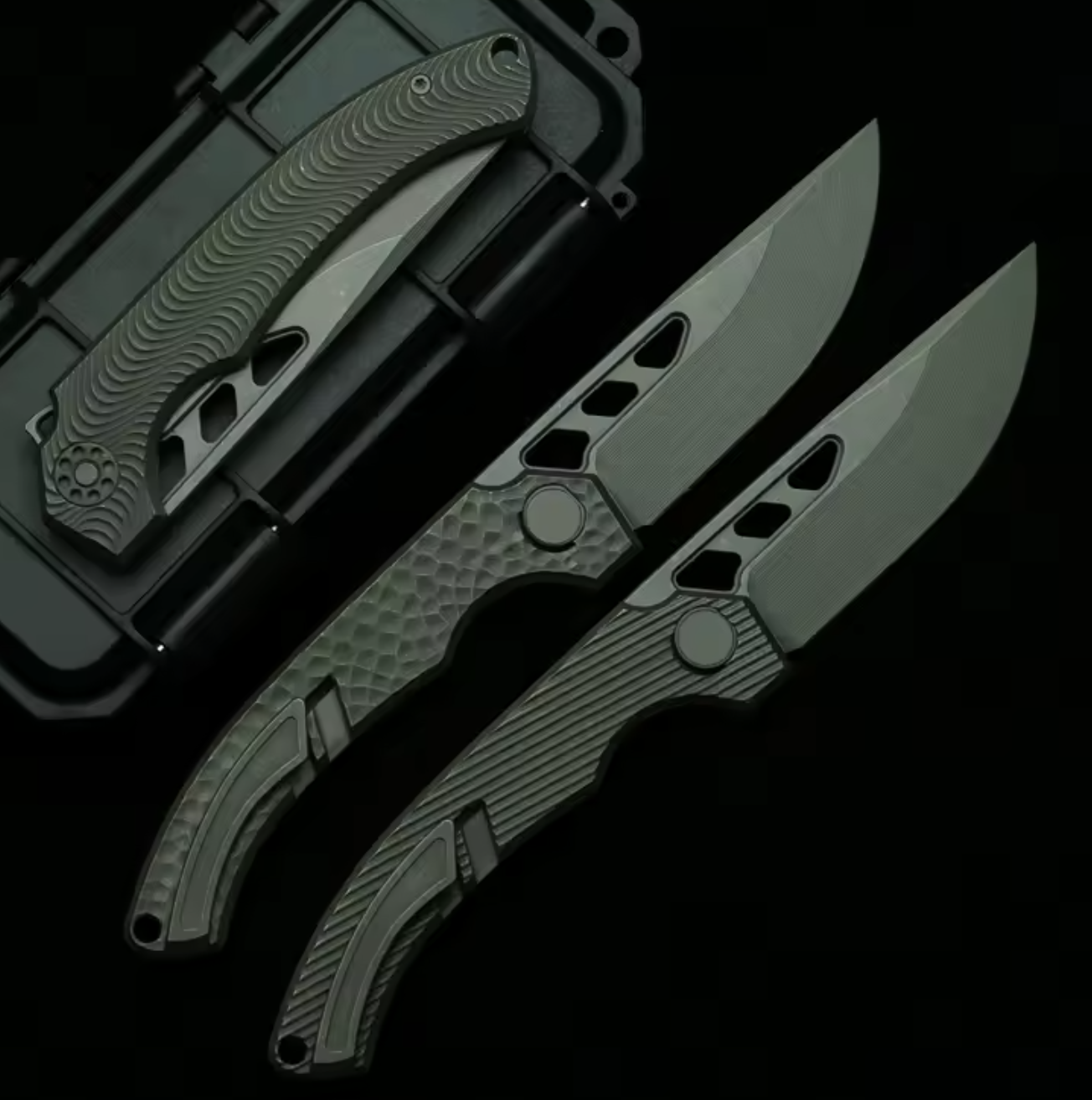
N690 vs. D2
6 Surprising Differences (Ultimate Guide)

If you’ve spent any time browsing budget-to-midrange EDC knives, you’ve almost certainly run into these two names. In the N690 vs. D2 debate, both steels have earned a loyal following for delivering solid performance well above their price point — though they get there in very different ways. N690 is a true stainless steel prized for corrosion resistance and easy maintenance, while D2 is a high-carbon tool steel famous for holding an edge longer than steels twice its price. This N690 vs. D2 breakdown covers where each steel comes from, how their chemistry shapes real-world performance, and which one makes more sense depending on how you actually use a knife.
Quick Answer: D2 holds an edge longer thanks to its high carbide volume, making it the better pick if edge retention is your top priority. N690 is more corrosion-resistant, tougher, and easier to sharpen, making it the better all-around choice for everyday carry — especially in humid climates or near water. In the D2 vs N690 matchup, the right pick comes down to whether you value maximum wear resistance or easier day-to-day ownership.
Where These Steels Come From
N690 (sometimes written N690Co) is produced by Böhler-Uddeholm, the same Austrian steelmaker behind M390 and Elmax. It’s a cobalt-alloyed stainless steel that became especially popular with European knife brands — you’ll see it on a lot of Italian, Balkan, and Scandinavian-made knives — thanks to a strong balance of edge retention, toughness, and corrosion resistance at a more accessible price than the “super steels.”
D2 has a completely different lineage. It’s an American-designed, high-carbon, high-chromium tool steel that dates back decades, originally developed for industrial cutting and stamping dies rather than knives. It sits right at the edge of what’s technically classified as “stainless” — chromium content around 12%, just under the 13% threshold most metallurgists use as the stainless cutoff — which is why D2 is often called “semi-stainless.” Despite its age, D2 remains one of the most widely used knife steels in the world because it’s inexpensive to produce and delivers genuinely impressive edge retention.
Breaking Down the Chemistry
Steel performance comes down to composition, so it’s worth looking at what’s actually in each alloy — and the N690 vs. D2 chemistry gap explains most of the performance differences below. N690 runs roughly 1.08% carbon, 17% chromium, 1.1% molybdenum, 1.5% cobalt, and small amounts of vanadium and tungsten. D2 runs much higher on carbon and chromium: roughly 1.5% carbon, 12% chromium, 1% molybdenum, and 1% vanadium. The differences that matter most:
- Carbon: D2 has significantly more carbon than N690, which allows for a much higher volume of hard carbides in the steel’s microstructure. This is the main driver of D2’s excellent edge retention — more carbides means more resistance to abrasive wear.
- Chromium: N690’s 17% chromium content puts it comfortably in true-stainless territory, giving it strong rust and stain resistance. D2’s chromium sits closer to 12%, and much of that chromium gets tied up forming carbides rather than protecting the steel matrix from corrosion — which is why D2 is more prone to spotting and staining, especially with prolonged moisture exposure.
- Cobalt: N690 is one of the few common knife steels alloyed with cobalt, which improves hardness and helps the steel take a fine edge without sacrificing toughness. D2 has no cobalt content.
In short: D2 leans hard into edge retention at the expense of corrosion resistance and ease of sharpening, while N690’s chemistry trades some outright wear resistance for a tougher, more corrosion-resistant, and easier-to-maintain blade.
D2 vs N690: Quick Comparison Chart
| Property | N690 | D2 |
|---|---|---|
| Manufacturer | Böhler-Uddeholm | Various (originally U.S. tool steel) |
| Composition | ~1.08% C, 17% Cr, 1.1% Mo, 1.5% Co | ~1.5% C, 12% Cr, 1% Mo, 1% V |
| Steel Type | True stainless | Semi-stainless / tool steel |
| Edge Retention | Good | Excellent — better |
| Corrosion Resistance | Excellent — much better | Fair — prone to staining |
| Toughness | Better | Fair — can be brittle |
| Ease of Sharpening | Easier | Harder despite non-powder steel |
| Best For | EDC, wet/humid environments | Budget hard-use, dry climates |
Edge Retention: N690 vs. D2
This is the category D2 is famous for. Despite not being a powder-metallurgy steel, D2’s high carbon content and heavy carbide volume give it edge retention that punches well above its price point — often outperforming stainless steels that cost significantly more. It’s a long-time favorite for budget hard-use and hunting knives for exactly this reason. N690 holds a working edge respectably, comparable to steels like AUS-8 or VG-10, but it doesn’t come close to D2’s wear resistance. If long stretches between touch-ups is the priority, D2 wins clearly. Winner: D2, and by a wider margin than most category comparisons in this price range.
Corrosion Resistance
This is where N690 pulls decisively ahead. With chromium content well above the stainless threshold, N690 resists rust and staining reliably even with imperfect maintenance — wipe it down after use and it’ll hold up fine in humid or coastal environments. D2, by contrast, sits right at the edge of “stainless” and will spot, stain, or even rust if left wet or exposed to salt air without regular care. Plenty of owners run D2 knives for years without issue, but it demands more attentive maintenance than a true stainless steel. Winner: N690, by a clear margin.
Toughness
N690 is the tougher of the two steels. Its lower carbide volume and cobalt alloying give it a more shock-resistant edge that’s less prone to chipping under stress. D2 has a reputation — deserved, though sometimes overstated — for being somewhat brittle, particularly at thinner edge geometries or in poorly heat-treated batches; it can be prone to small chips if used for harder tasks like batoning or prying. A well heat-treated D2 blade holds up fine for normal cutting tasks, but N690 gives more margin for error. Winner: N690.
Ease of Sharpening
This one surprises people. D2 isn’t a powder-metallurgy super steel, but its dense carbide structure still makes it noticeably harder to sharpen than most steels in its price class — many owners find it more stubborn on the stones than some higher-end stainless steels. N690, by comparison, sharpens easily and takes a keen edge without much fuss, closer to what you’d expect from a mid-tier stainless steel like 14C28N or VG-10. For anyone maintaining their own edge with basic stones, N690 is the more forgiving steel to live with. Winner: N690, and this is one of the more commonly underestimated differences between the two.
Cost and Availability
D2 is one of the most widely available knife steels on the market — it shows up across countless budget and midrange knives because it’s inexpensive to produce while still delivering strong edge retention, making it a favorite for value-focused brands. N690 is a bit less ubiquitous but still very common, particularly on knives from European manufacturers and import brands that source Böhler steel. Pricing between knives running either steel is generally comparable at the budget-to-midrange tier.
N690 vs. D2: Which Should You Choose?
Both steels are excellent choices for anyone who doesn’t want to pay super-steel prices but still wants real performance. That said, here’s a simple way to think about it:
- Choose D2 if maximum edge retention is the priority and you’re willing to do a bit more upkeep — a great fit for hunting knives, kitchen use, or dry-climate EDC where corrosion is less of a concern.
- Choose N690 if you want a tougher, lower-maintenance blade that’s easier to sharpen and better suited to humid or wet environments — a strong all-around EDC choice.
Both steels have earned their reputations for a reason, and neither is a wrong choice in the N690 vs. D2 matchup. The best approach, if you’re on the fence, is to think about your climate and how much maintenance you’re willing to put in — D2 rewards a bit of extra care with exceptional edge holding, while N690 is the lower-maintenance, more forgiving everyday option.
Frequently Asked Questions
Is D2 better than N690?
D2 has better edge retention thanks to its high carbide volume, so it tends to be the better pick if maximum wear resistance is the priority. N690 is more corrosion-resistant, tougher, and easier to sharpen, making it the better all-around choice for humid environments or lower-maintenance ownership.
Is N690 a good stainless steel?
Yes. N690 is a true stainless steel with strong corrosion resistance, good toughness, and easy sharpening — a reliable mid-tier performer that’s especially popular on European-made EDC knives.
Does D2 steel rust?
D2 can rust or stain if left wet or exposed to salt air without care, since its chromium content sits right at the edge of the stainless threshold. It’s often called “semi-stainless” for this reason. Regular wiping and light oiling keeps it in good shape.
Which is easier to sharpen, N690 vs D2?
N690 is easier to sharpen. Despite not being a powder-metallurgy steel, D2’s dense carbide structure makes it more resistant to abrasion from sharpening stones than its price point would suggest, so it typically takes more time and effort to restore an edge.
Comments are closed.