
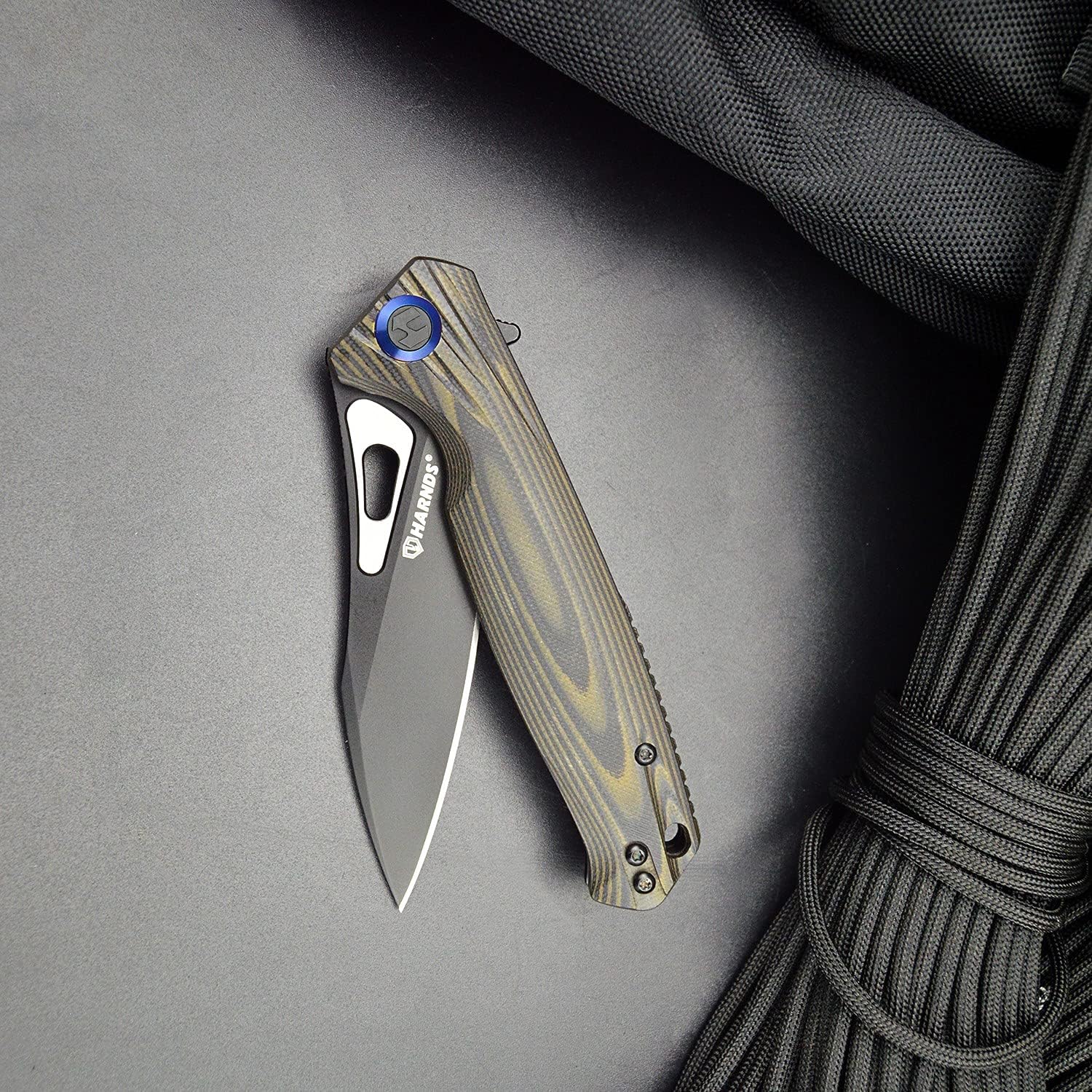
5 Shocking Secrets About K110 Blade Steel You Need to Know
The Budget Tool Steel That Outperforms Its Price Tag

If you’ve been shopping for budget-to-midrange EDC knives lately, there’s a good chance you’ve run into K110 steel on a spec sheet and wondered what you’re actually getting. It’s not as famous as S35VN or MagnaCut, and it doesn’t get the hype that D2 does — despite being nearly identical to it. So what is K110, and is it worth carrying?
Short answer: yes, with some caveats. Here’s the full breakdown — including five things about this steel that catch most buyers off guard.
5 Shocking Secrets About K110 Blade Steel
- It’s basically D2 steel in disguise. K110 Blade Steel is the European (Böhler-Uddeholm) equivalent of American D2 — nearly identical chemistry, nearly identical performance, but often a lower price tag simply because the name isn’t as widely recognized.
- Its edge retention punches way above its price class. Properly heat-treated K110 runs 58-62 HRC, putting it in the same conversation as steels that cost significantly more.
- It’s not actually stainless — and that surprises a lot of buyers. With chromium sitting around 11%, K110 Blade Steel falls just short of true stainless status, meaning it can develop surface rust if neglected in wet conditions.
- It trades toughness for wear resistance. Like D2, K110 can be prone to chipping at thin edge geometries or under hard use like batoning — a real tradeoff to know before you buy.
- It’s harder to sharpen than budget stainless steels — but worth the effort. K110 Blade Steel takes a bit more work on the stones than 8Cr13MoV or AUS-8, but rewards you with a noticeably more durable edge.
What Is K110 Blade Steel?
K110 Blade Steel is a high-carbon, high-chromium tool steel produced by Böhler-Uddeholm, an Austrian steelmaker with a long history in the tool and cutlery steel business. It’s classified under the German DIN standard as 1.2379, and if that number looks familiar, it’s because K110 is essentially the European equivalent of American D2 tool steel — same steel family, same core performance profile, produced to a slightly tighter specification depending on the mill.
You’ll mostly see K110 show up in knives from European and Asian manufacturers as a cost-effective alternative to D2, particularly in budget and mid-tier folders where a brand wants strong wear resistance without the price tag of a premium powder-metallurgy steel.
K110 Chemical Composition
K110 Blade Steel’s performance comes down to its chemistry. A typical composition looks like this:
- Carbon: ~1.55% — very high, which drives hardness and wear resistance
- Chromium: ~11.3% — high enough to form a lot of chromium carbides (great for edge retention) but not high enough to make the steel fully stainless
- Molybdenum: ~0.75% — adds toughness and improves hardenability
- Vanadium: ~0.75% — forms hard vanadium carbides that boost wear resistance and help refine grain structure
That combination — huge carbon content, high chromium, and a bit of vanadium — is what makes K110 behave so much like D2. Both steels sit in the “semi-stainless” tool steel category: they resist corrosion reasonably well thanks to the chromium content, but they don’t have enough chromium in solution to be classified as true stainless steel (that threshold is generally around 13%).
Edge Retention
This is where K110 earns its reputation. With that much carbon and chromium carbide formation, K110 holds an edge extremely well for a steel in its price class. Properly heat-treated K110 will typically run in the 58-62 HRC range, and at the higher end of that window it competes with steels that cost significantly more.
For everyday tasks — breaking down cardboard, food prep, general cutting chores — K110 will outlast a lot of the cheap stainless steels (420HC, 8Cr13MoV, etc.) that show up in budget knives by a wide margin.
Toughness
Toughness is the tradeoff. High-carbide tool steels like K110 and D2 aren’t known for flexibility or impact resistance the way tougher, lower-carbide steels (like 154CM or CPM-S35VN) are. K110 can be prone to chipping at very thin, acute edge geometries or if it’s pushed into harder use like batoning or prying.
That said, “not the toughest” doesn’t mean fragile. For an EDC folder doing EDC things, K110 Blade Steel’s toughness is perfectly adequate — this is a steel that struggles in stress tests designed to find weaknesses, not in normal daily carry.
Corrosion Resistance
Here’s the honest tradeoff for the excellent wear resistance: K110 is not stainless. With chromium sitting around 11%, most of it gets tied up forming carbides rather than staying in solution to protect the surface from rust, which is what actually confers stainless properties.
In practice, this means:
- K110 blades can develop a patina or surface rust if left wet or exposed to humidity for extended periods
- A light coat of oil after use in wet conditions goes a long way
- It’s not a steel you want for saltwater or marine environments without extra care
This is identical to D2’s behavior, and it’s a known, accepted tradeoff for the wear resistance you get in return.
Ease of Sharpening
K110 Blade Steel is harder to sharpen than simple stainless steels like 8Cr13MoV or AUS-8, but it’s not in the “nightmare to sharpen” category that some super-steels fall into. With a quality sharpening system — ceramic rods, diamond stones, or a guided system like a Wicked Edge or KME — K110 responds well and takes a genuinely sharp, durable edge. Just don’t expect it to sharpen as fast as a soft stainless steel on a basic pull-through sharpener.
K110 vs. D2: Is There a Real Difference?
For all practical purposes, no — not one you’d notice in actual use. Both are high-carbon, high-chromium tool steels with nearly identical compositions and performance characteristics. Any differences come down to the specific mill’s processing, the manufacturer’s heat treatment, and minor variances in trace elements — not the steel type itself. If a knife brand tells you their K110 blade performs basically like D2, they’re right.
Who Should Buy a K110 Knife?
K110 is a great fit if you:
- Want strong edge retention without paying premium-steel prices
- Do mostly everyday cutting tasks rather than heavy-duty outdoor work
- Don’t mind a bit of blade maintenance (wiping down, occasional oiling)
- Are shopping in the budget-to-midrange price bracket and want more performance than basic stainless steels offer
It’s less ideal if you need a low-maintenance stainless blade for wet environments, or if you’re doing hard use where chip resistance matters more than edge retention.
Final Verdict
K110 Blade Steel is one of the better-kept secrets in budget knife steels. It punches well above its price class on edge retention, it’s a proven, well-understood tool steel formula, and it delivers D2-level performance without the D2-associated price premium some brands charge just for the name recognition. The main thing to keep in mind is that it’s not stainless — a little basic maintenance keeps it performing at its best for years.
If you’re comparing knives in the budget-to-midrange range and see K110 on the spec sheet, don’t let the lesser-known name fool you. It’s a legitimately solid choice — just remember to give the blade a wipe-down after wet use.
See how other Blade Steels Rank
Blade Steel Comparison Chart
Have a knife with K110 steel? Drop a comment below and let me know how it’s holding up for you — I’m always curious to hear real-world experiences with this steel.