
Nitro-V vs 14C28N: Which Budget Blade Steel Is Better?

If you’ve shopped for a pocket knife in the $30 to $100 range lately, you’ve almost certainly run into two steels over and over: Nitro-V and Sandvik 14C28N. They show up on everything from bargain flippers to well-built mid-tier EDC folders, and both get recommended constantly in knife forums as the “smart money” choice.
That’s not a coincidence. In the Nitro-V vs 14C28N matchup, you’re looking at two close cousins built on the same basic idea, and in a lot of real-world use you’d struggle to tell them apart. But there are differences, and depending on how you carry and use a knife, one may suit you a little better than the other. I’ve carried both, sharpened both, and abused both, so let’s break it down.
Where These Steels Come From
14C28N: The Steel Kershaw Asked For
14C28N comes from Sandvik, the Swedish steelmaker whose materials division now operates as Alleima. The story goes that Kershaw approached Sandvik around 2009 looking for an upgrade to 13C26, a razor-blade steel they’d been using. 13C26 took a wicked edge, but its corrosion resistance left something to be desired.
Sandvik’s answer was to bump the chromium and add nitrogen. Nitrogen behaves a lot like carbon in steel, adding hardness and strength, but it also helps keep chromium “free” in the steel where it can actually fight rust. The result was a fine-grained, tough, genuinely stainless steel that sharpens easily and holds up to everyday carry beautifully. Kershaw built a huge part of its lineup around it, and many other value-focused brands followed.
Nitro-V: An American Answer
Nitro-V was developed by New Jersey Steel Baron, a supplier well known among custom and small-batch makers. It starts from AEB-L, another Swedish razor-blade steel and close relative of 13C26, then adds nitrogen, a small amount of vanadium, and a trace of niobium.
The goal was much the same as with 14C28N: keep AEB-L’s excellent toughness and fine edge, while improving corrosion resistance and nudging up wear resistance a bit. It caught on quickly with custom makers because it’s forgiving and predictable to heat treat, and production brands like CIVIVI and Kizer have since used it on a long list of popular folders.
Chemical Composition Compared
Here’s a rough side-by-side of the typical published compositions. Exact numbers can vary slightly by source and batch.
| Element | Nitro-V | 14C28N | What It Does |
|---|---|---|---|
| Carbon (C) | ~0.68% | ~0.62% | Hardness and edge strength |
| Chromium (Cr) | ~13% | ~14% | Corrosion resistance |
| Nitrogen (N) | ~0.11% | ~0.11% | Hardness plus improved rust resistance |
| Vanadium (V) | ~0.08% | — | Grain refinement, small wear boost |
| Niobium (Nb) | ~0.025% | — | Grain refinement |
| Manganese (Mn) | ~0.4% | ~0.6% | Hardenability |
| Silicon (Si) | ~0.4% | ~0.2% | Strength during heat treatment |
Look at those numbers and the family resemblance in Nitro-V vs 14C28N is obvious. Nitro-V runs slightly higher carbon and adds tiny amounts of vanadium and niobium. 14C28N runs slightly higher chromium. Those small differences are what drive the subtle performance gaps below.
Performance Head-to-Head
Edge Retention
Neither of these is an edge retention monster. They’re simple, fine-carbide stainless steels, and they don’t have the big vanadium carbide content you’ll find in steels like S35VN, M390, or MagnaCut. In practical terms, both hold an edge noticeably longer than 8Cr13MoV or 420HC, and roughly on par with or a touch below 154CM and D2, depending on heat treat.
Nitro-V’s slightly higher carbon and small vanadium addition can give it a marginal edge, but we’re talking about a difference you probably won’t notice while breaking down boxes. Edge: Nitro-V, by a hair.
Toughness
This is where both steels shine. Their very fine carbide structure means they resist chipping and rolling far better than many steels that look more impressive on a spec sheet. Testing published by metallurgist Larrin Thomas at Knife Steel Nerds has shown both steels ranking among the toughest stainless options available, well ahead of D2 and many premium powder steels at similar hardness.
For a knife that might get used to pry a staple, cut through a zip tie at an awkward angle, or get dropped on concrete, that toughness matters. Edge: Tie.
Corrosion Resistance
Corrosion resistance was the whole reason both of these steels were created, and both deliver. Neither is in the same league as LC200N or H1, but both are comfortably stainless for everyday carry, including sweaty pockets and humid weather.
14C28N’s higher chromium generally gives it a small advantage here. If you live near salt water or tend to forget about your knife after cutting citrus, that slight bump is worth considering. Edge: 14C28N.
Ease of Sharpening (Nitro-V vs 14C28N)
Here’s where these steels make a lot of people happy. Because they lack large, hard vanadium carbides, both sharpen quickly on ordinary stones, ceramic rods, or even a basic guided system. You don’t need diamond plates, and you can bring a dull edge back to hair-popping sharp in a few minutes.
Both also take an exceptionally fine, keen edge thanks to their small carbides, which is part of why they feel so sharp out of the box. Edge: Tie, with 14C28N maybe a touch easier.
Hardness and Heat Treatment
Both steels are typically run somewhere in the 58 to 61 HRC range on production knives. At that hardness they strike a nice balance: hard enough to hold a fine edge, soft enough to stay tough.
Makers sometimes push Nitro-V a bit higher, and it tolerates that well. 14C28N is often run around 58 to 60 HRC, which plays to its toughness and easy sharpening. Again, these are typical ranges, not rules.
Price and Availability
You’ll mostly find both steels in the budget to mid-range price bracket. 14C28N has been around longer and is extremely common on Kershaw folders and a wide range of value brands. Nitro-V has become a go-to for CIVIVI, Kizer’s Vanguard line, and plenty of custom and mid-tech makers.
In general, knives in either steel tend to be priced similarly, so the Nitro-V vs 14C28N decision usually comes down to the knife you want rather than the steel itself.
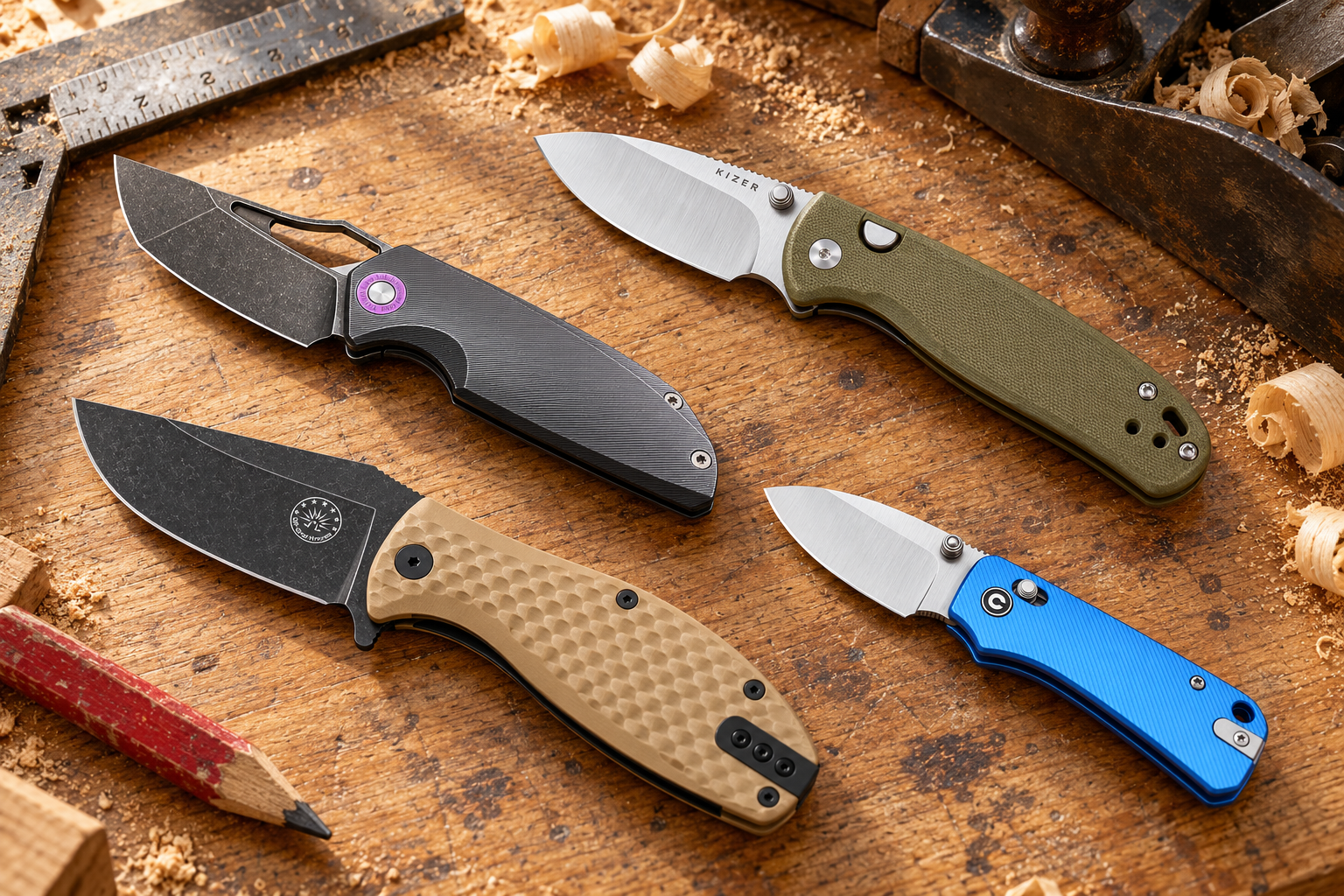
Knives From My Collection
I own and carry knives in both steels. Here are a few I can personally recommend:
Quick Verdict Table
| Category | Winner |
|---|---|
| Edge retention | Nitro-V (slightly) |
| Toughness | Tie |
| Corrosion resistance | 14C28N (slightly) |
| Ease of sharpening | Tie |
| Availability | Tie |
Which Should You Choose (Nitro-V vs 14C28N)?
Choose Nitro-V if you want a hair more edge retention, like the idea of a steel that custom makers favor, or have your eye on one of the many CIVIVI and Kizer models that use it.
Choose 14C28N if you live somewhere humid or coastal, want a proven steel with a long track record, or love the idea of touching up your edge in two minutes on a ceramic rod.
The honest answer to Nitro-V vs 14C28N, though, is that you can’t really go wrong with either. Both are tough, fine-grained, easy-to-sharpen stainless steels that punch well above their price point. Pick the knife with the design, ergonomics, and lock you like best, and trust that the steel will treat you well.
Have a favorite knife in Nitro-V or 14C28N? Let me know in the comments, and check out the TactileCarry YouTube channel for hands-on reviews.